Produced By-Foley Andreassen
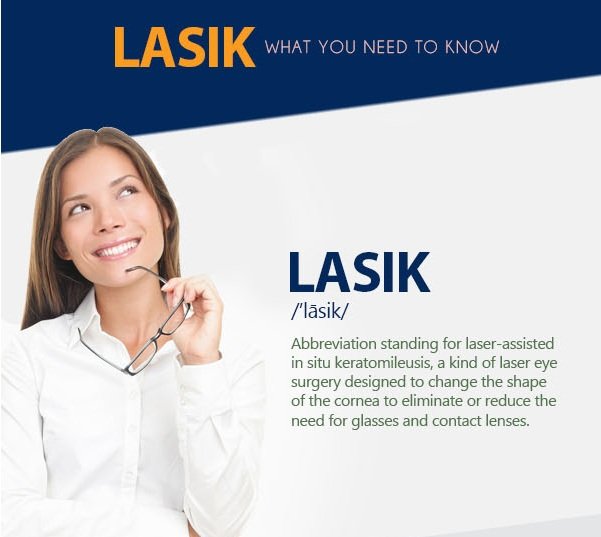
Have you ever before considered Refractive Lens Exchange (RLE) as a choice for vision modification? While it isn't as commonly talked about as LASIK, RLE could be a game-changer for your vision. Lots of people overlook its benefits, assuming typical techniques are their only option. Yet what are the real advantages, and what might your eye doctor not be telling you regarding this treatment? Allow's check out the ins and outs of RLE with each other.
Understanding Refractive Lens Exchange: The Fundamentals
Refractive lens exchange (RLE) is a surgical procedure that can dramatically boost your vision, particularly if you're dealing with presbyopia or serious refractive mistakes.
Throughout RLE, your eye cosmetic surgeon eliminates your eye's natural lens and changes it with a fabricated one customized to your vision needs. This procedure can fix nearsightedness, farsightedness, and astigmatism, offering you clearer vision without relying upon glasses or contact lenses.
The surgical treatment is typically quick, taking less than an hour, and the majority of individuals experience very little discomfort. Recovery is relatively quickly, enabling you to go back to your everyday tasks shortly after.
If you're thinking about RLE, speaking with your eye doctor can help you determine if it's the best choice for you.
Trick Distinctions In Between RLE and Traditional Cataract Surgical Treatment
While both refractive lens exchange (RLE) and conventional cataract surgical treatment include replacing the eye's all-natural lens, their main objectives and person accounts vary considerably.
RLE is targeted at people seeking to minimize their reliance on glasses or call lenses because of refractive errors, often prior to cataracts establish. On the other hand, conventional cataract surgical procedure generally targets people that've established cataracts, which shadow the lens and impair vision.
The lenses used in RLE can supply a wider range of vision modification, while common cataract surgery normally entails standard monofocal lenses.
In addition, RLE candidates are frequently more youthful and in great general health and wellness, whereas cataract clients may be older and have various other wellness worries.
Selecting the right procedure depends on your certain vision demands and conditions.
Prospective Benefits and Considerations of RLE
If you're considering refractive lens exchange (RLE), you'll find several prospective advantages that may improve your quality of life.
RLE can supply you with more clear vision, minimizing or removing the demand for glasses or get in touch with lenses. https://www.clicanoo.re/AFP/Article/2018/01/29/Paris-2024-fait-la-promotion-du-sport-et-de-lolympisme-lecole_512335 offers an opportunity to resolve presbyopia and various other refractive mistakes concurrently, commonly improving your overall visual acuity.
In addition, RLE can be a great choice if you're not an ideal prospect for LASIK. However, it is very important to weigh the factors to consider, like the expense, prospective risks, and the healing duration.
Reviewing your details demands with your optometrist can aid you make a notified choice, ensuring you pick the most effective path for your vision improvement.
Final thought
To conclude, refractive lens exchange supplies a distinct solution for vision improvement that goes beyond what LASIK can provide. It's essential to weigh the benefits against prospective risks and expenses prior to making a decision. Do not be reluctant to ask your optometrist the hard concerns to ensure you completely comprehend the procedure and its effects for your vision. With https://mgyb.co/s/SRKbK , you can with confidence choose the best alternative for your eyes and way of life.